• Skip to main content

Liberals

Liberals to announce marijuana will be legal by July 1, 2018

The Liberal government will announce legislation next month that will legalize marijuana in Canada by July 1, 2018.

CBC News has learned that the legislation will be announced during the week of April 10 and will broadly follow the recommendation of a federally appointed task force that was chaired by former liberal Justice Minister Anne McLellan.

Bill Blair, the former Toronto police chief who has been stickhandling the marijuana file for the government, briefed the Liberal caucus on the roll-out plan and the legislation during caucus meetings this weekend, according to a senior government official who spoke to CBC News on condition of anonymity.

Blair Marijuana 20160224

Bill Blair, parliamentary secretary to the minister of justice, briefed the Liberal caucus on new marijuana legislation, which leaves the provinces to decide how marijuana is distributed and sold, according to a senior government official. (Sean Kilpatrick/Canadian Press)

Provinces to control sales

The federal government will be in charge of making sure the country’s marijuana supply is safe and secure and Ottawa will license producers.

But the provinces will have the right to decide how the marijuana is distributed and sold. Provincial governments will also have the right to set price.

While Ottawa will set a minimum age of 18 to buy marijuana, the provinces will have the option of setting a higher age limit if they wish.

4 plants per household

As for Canadians who want to grow their own marijuana, they will be limited to four plants per household.

Legalizing marijuana was one of the more controversial promises Justin Trudeau made as he campaigned to become prime minister.

  • Highlights from the federal marijuana task force report
  • What can Canada learn from U.S., Uruguay about selling marijuana?

But in their platform the Liberals said it was necessary to “legalize, regulate and restrict access to marijuana” in order to keep drugs “out of the hands of children, and the profits out of the hands of criminals.”

The Liberals had promised to introduce legislation by the Spring of 2017. Announcing the legislation the week of April 10 will allow the party to hit that deadline.

Raids raise questions

Trudeau referred again to that rough timetable a few weeks ago when he said the legislation would be introduced before the summer. But at the same time he also warned that it wasn’t yet open season for the legal sale of marijuana.

“Until we have a framework to control and regulate marijuana, the current laws apply,” Trudeau said in Esquimalt, B.C. on March 1.

That warning became more concrete a week later, when police in Toronto, Vancouver and other cities carried out raids on marijuana dispensaries and charged several people with possession and trafficking, including noted pot advocates Marc and Jodie Emery.

Trudeau’s promise to legalize marijuana was seen as one of the reasons for the Liberals’ strong showing among youth voters in the 2015 election.

But at the NDP’s leadership debate in Montreal Sunday, which was focused on youth issues, several of the candidates pointed to marijuana legislation as an example of a broken Liberal promise.

Poster of video clip

Marijuana could be legalized by 2018 Canada Day

“I do not believe Justin Trudeau is going to bring in the legalization of marijuana and as proof that … we are still seeing, particularly young, Canadians being criminalized by simple possession of marijuana,” said B.C. MP Peter Julian.

  • Federal marijuana legislation to be introduced in spring 2017, Philpott says

Corrections

  • This story has been updated from an earlier version that, due to an editing error, incorrectly stated Prime Minister Justin Trudeau made his comments about the timing of legislation in Halifax. In fact, he made his March 1 comments in Esquimalt, B.C.
    Mar 27, 2017 1:13 PM ET

With files from Canadian Press

4/20 Vancouver organizers say Liberals’ Cannabis Act maintains criminalization and the reasons to protest

With Canada now well on its way to legal recreational marijuana, what is there left for activists to protest at Vancouver’s annual 4/20 event?

RELATED STORIES

  • Cannabis activist Dana Larsen says marijuana-legalization bill contains “bizarre” penalties
  • Liberals and NDP promise marijuana reform but pot crimes could still haunt Canadians for decades
  • Police report Vancouver’s first 4/20 at Sunset Beach attracted a record crowd and few incidents

Plenty, according to organizers of the massive gathering, which is scheduled to happen this Thursday (April 20) at Sunset Beach in the city’s West End.

In a telephone interview, Canada’s most prominent advocate for marijuana reform, Jodie Emery, was highly critical of legislation the Liberal government tabled in Parliament on April 13.

“It is prohibition 2.0,” she told the Georgia Straight. “It is not legalization. It is a continuation of the kind of criminalization that we’ve seen before, with the introduction of even harsher laws that will victimize even more peaceful Canadians.”

Emery said that this year’s 4/20 event is therefore about getting people involved in aspects of the legalization process that still remain to be determined.

“The provincial governments and city governments will be drafting a lot of the actual details, so we have to start reaching out to our elected officials there and telling them the truth about cannabis,” she explained.

If passed into law, the Liberal government’s Cannabis Act will make it legal for people to purchase and possess up to 30 grams of marijuana (as long as it is produced by a company authorized by the federal government). It would also permit individuals to grow up to four plants in their home.

Dana Larsen said that’s the good news. In a separate interview, the former vice president of the Canadian Association of Cannabis Dispensaries added that just about everything else in the Liberals’ plan is bad news. For example, Larsen said, the proposed laws provide for prison sentences for anyone caught giving even a small amount of weed to a friend under the age of 18. They also make it a crime to smoke a joint that was rolled with marijuana that was not grown by a company approved for production by Ottawa.

“Unless you grow it yourself or you buy it legally, even possession is still banned,” Larsen continued. “There are no comparable laws for alcohol or tobacco where they restrict the ownership of your alcohol like that.”

Larsen asked why the Liberals have proposed jail time for people who break the rules with marijuana while similar offences with alcohol or tobacco only result in fines.

“I would actually be happy if they just took all the alcohol rules and laid them on to cannabis,” he said. “I believe that the rules should be less severe for cannabis, because it is so much safer than alcohol. But as a term of public policy, I understand.”

In a separate interview, Kirk Tousaw, an Abbotsford-based lawyer who specializes in drug crimes, said that because it is widely understood that marijuana is less harmful than alcohol, these tougher penalties for weed simply don’t make sense.

“That is just out of whack with what any rational system of government regulation should want to do,” he said. “You should want to penalize offences involving the more dangerous substances more harshly, not less harshly.”

The Vancouver police estimated that more than 20,000 people met at Sunset Beach during the climax of 2016’s 4/20 festival.
JODIE EMERY

In October 2015, when Justin Trudeau was still a candidate on the campaign trail, the Straight published an in-depth report on the competing Liberal and NDP plans for marijuana reform. It noted that during the first six months of that year, only 327 people spent time inside a B.C. Corrections institution for a drug crime.

However, an additional 1,069 British Columbians were convicted of a drug offence but were given probation or released on a conditional sentence. A number of people interviewed who fell into that category told the Straight stories of how their names were entered into computer systems that complicated things like international travel and job applications.

Tousaw warned that under the Liberals’ framework for legalization, people will continue being arrested for marijuana and will be stuck with records that could haunt them for decades.

“It seems very clear that the government is committed to retaining significant criminal penalties, including the prospect of lengthy prison terms for cannabis-related activities that fall outside of the fairly narrow confines of what is going to be legalized,” he said. “There is no reason that a Canadian with 31 grams of cannabis should face a criminal record and the possibly of being fined or going to jail because they are one gram over some arbitrary number.”

Larsen emphasized that as long as people are going to prison for marijuana, Vancouver’s 4/20 festival is a demonstration against laws he described as unjust.

“It remains a protest,” he said. “Anyone who thought that this was going to be a big celebration and that we have nothing left to protest anymore, they are very wrong.”

Follow Travis Lupick on Twitter, Facebook, and Instagram.

No plan for pot-conviction amnesty amid legalization move, Liberals say

The federal plan to legalize recreational marijuana does not include the general amnesty for past pot convictions some would like to see, says Public Safety Minister Ralph Goodale.

Newly tabled legislation would allow people 18 and older to publicly possess up to 30 grams of dried cannabis, or its equivalent in non-dried form.

But the Trudeau government is not considering a blanket pardon for people with criminal records for possessing small amounts of the drug, Goodale said in an interview.

“That’s not an item that’s on the agenda at the moment.”

  • Pot possession suspects face uncertain future
  • Ottawa wants young teens to avoid criminal record for pot possession
  • Legalization bill provides many answers, but questions remain
  • Liberals table bills to legalize pot, clamp down on impaired driving

The government has also made it clear that the move to legalization by mid-2018 doesn’t mean lax law enforcement during the transition period.

“It is important to note that as the bill moves through the legislative process, existing laws prohibiting possession and use of cannabis remain in place, and they need to be respected,” Goodale told a news conference last Thursday.

“This must be an orderly transition. It is not a free-for-all.”

Pot Bill RCMP 20170410

The federal government has introduced legislation to legalize and regulate the sale of recreational marijuana by July, 2018. (Darryl Dyck/Canadian Press)

The NDP has called on the government to immediately decriminalize simple possession, calling it a logical first step that would prevent young people from being burdened with criminal records for the rest of their lives.

Eligible for record suspension after 5 years

The C.D. Howe Institute, a prominent think-tank, has recommended the government consider pardoning people convicted of pot possession — and drop any outstanding charges — to free up much-needed resources for legalization.

Legalization could initially result in an increase in consumption and a need for more police monitoring and enforcement, prompting more government spending, the institute said last year in a policy paper.

“This discussion suggests that dropping charges against individuals for illegal possession who have no other Criminal Code convictions or charges, would save considerable government resources without other significant offsetting adverse spillovers,” it said.

“Similarly, the federal government should consider pardoning individuals who have been convicted for illegal possession but have not been convicted or charged for any other Criminal Code offence.”

A pardon doesn’t erase a criminal record. But it can make it easier for someone to find work, travel and generally contribute to society.

Goodale noted there is already a formal process to have a criminal record set aside.

Those convicted of simple possession of up to 30 grams of marijuana are eligible to apply for a pardon, now known as a record suspension, five years after their sentence is completed.

  • How to legalize marijuana, without ever saying ‘marijuana’
  • Analysis: Pot may not be the new beer, but Trudeau could ease taboo

The Liberal government is reviewing Conservative changes that made people wait longer and pay more to obtain a record suspension. Goodale said “there’s no specific consideration” of difficulties in obtaining pardons for marijuana convictions.

“But the law does exist where people can make an application and have their case considered.”

An internal Public Safety Canada briefing note, released last year under the Access to Information Act, said the issue of record suspensions would be “important to consider during the marijuana legalization discussions.”

© The Canadian Press, 2017
The Canadian Press

Justin Trudeau and the dangers of legalizing weed

There’s a paradox in the way Justin Trudeau has positioned himself on marijuana. From the time he first came out in favour of legalizing pot—during a summer swing through British Columbia as the Liberals’ new leader in 2013—Trudeau has framed this seemingly hip policy in surprisingly square terms.

More than anything, he’s stressed making it harder for teenagers to buy it. In what has since become a familiar Liberal refrain, he lamented in B.C. that halcyon summer, “In many cases, it’s more difficult for young people to get their hands on cigarettes than it is to get their hands on weed.”

In that vein, his government’s officials set up this week’s unveiling of long-awaited marijuana legislation by emphasizing get-tough, rather than get-with-it, elements. They talk of stiff penalties for selling to kids, policies to prevent any post-legalization spike in driving while stoned, and funding for a public-education campaign on the dangers of marijuana.

So stern is their tone, in fact, that it’s easy to forget this policy was successfully hatched inside the Liberal party by its exuberant youth wing, back in 2012, and Trudeau’s embrace of it was heralded as a splashy sign of his unbuttoned, youth-courting style—the furthest thing from a law-and-order push.

But pollster David Coletto, of the Ottawa firm Abacus Data, says his research suggests Trudeau’s marijuana policy might not be so obviously potent with youth as is often assumed. A poll Abacus did last year for the Canadian Alliance of Student Associations found that only about 20 per cent of Canadians aged 18 to 24 listed legalizing marijuana as one of their top five policy priorities.

That’s far below the 63 per cent who picked making college and university more accessible and affordable, say, or the 54 per cent who put improving Canada’s health care system in their top five. Still, Coletto says marijuana has potentially more symbolic weight than those numbers suggest. Even if young adults rank affording school and getting decent health care as more vital than legally buying weed, failure to deliver on this marquee promise would, he says, “signify you’re not maybe who you said you were.”

And Trudeau looks far more vulnerable to being tagged as insincere after he broke his campaign promise to change the way Canadians elect MPs. Another pollster, Frank Graves of EKOS Research, sees marijuana legalization squarely in that light. “It is an important file and one where they can check off a clear and bold initiative as done,” Graves says. “Something that may be timely in light of the lack of apparent progress on the electoral-reform front.”

While keeping his promise, though, Trudeau must proceed cautiously. Graves sees “lots of concerns about how young people will be protected, where [marijuana] would be available, where the revenues would go and whether it would be in my neighborhood.”

So Trudeau aims to remind voters—especially younger voters—that he’s actually keeping at least this memorable 2015 campaign pledge. At the same time, his unwavering focus on regulatory restrictions seems designed to reassure all those Canadians who are still uneasy about legal weed. Finding the right balance will, of course, be tricky.

Some marijuana enthusiasts say regulations that are too constraining will frustrate the underlying aim of the law: to eliminate the illicit pot scene by creating a profitable legal market. Abi Roach, founder of a group called the Cannabis Friendly Business Association, warns that if the government allows only plain packaging and no advertising, for example, illegal sellers will continue to thrive through better marketing. She fears rules are coming down that will amount to “pushing cannabis into Prohibition 2.0.”

The report of the government’s own Task Force on Cannabis Legalization and Regulation said that online consultations found wide support for making regulations around marijuana much like those already in place around alcohol, including what’s allowed in terms of marketing and promotion.

However, the task force sided with health experts and police who tended to favour the far more stringent tobacco model. It cited the Centre for Addiction and Mental Health, for instance, which calls for a complete ban on marketing pot, and plain packaging that displays only product information and health warnings.

Assuming Trudeau leans in that direction, as expected, the paradox of his pot policy will become even more obvious in the days to come. He’ll have put his stamp on a landmark liberalization of drug policy—and yet be pilloried by the pro-pot lobby for not loosening up nearly enough. That might look like confusion about his brand, or like classic Liberal straddling of the centre.

No matter which way you see it, this issue that has been so closely wrapped up with Trudeau’s persona is about to become shared political property. His government can only go so far, under federal jurisdiction, in legalizing and regulating marijuana. The next raft of tough decisions—including settling the crucial question of who gets to sell marijuana—will fall to the provinces.

If Trudeau is deemed, in the end, to have pulled off his balancing act over pot, watch for some worried premiers to try to copy the trick in the months ahead.

Trudeau urges police to ‘enforce the law’ on marijuana

A frustrated Prime Minister Justin Trudeau wants police to “enforce the law” and criminally charge illegal marijuana dispensaries — even though weed legalization is looming.

“People are right now breaking the law,” Trudeau told the Star’s editorial board on Friday.

“We haven’t changed the laws. We haven’t legalized it yet. Yes, we got a clear mandate to do that. We’ve said we will. We’ve said we’re going to do it to protect our kids and to keep the money out of the pockets of criminals.”

But the spread of storefront “dispensaries” — scores of which have popped up on Toronto streets this year — is clearly a concern to the prime minister.

“It’s a situation that is frustrating and I can understand people’s frustration on this,” Trudeau said.

“The promise we made around legalizing marijuana was done for two reasons … that I was very, very clear about: one, to better protect our kids from the easy access they have right now to marijuana; and, two, to remove the criminal elements that were profiting from marijuana,” he said.

Prime Minister Justin Trudeau wants police to enforce the law and criminally charge illegal marijuana dispensaries.
Prime Minister Justin Trudeau wants police to enforce the law and criminally charge illegal marijuana dispensaries.  (JUSTIN TANG / THE CANADIAN PRESS)  

“We believe that a properly regulated, controlled system will achieve both of those measures. But we haven’t brought in that properly regulated, controlled system because it’s important that we do it right in order to achieve those two specific goals.”

That new regime will be unveiled next spring. The blueprint for the legislation is a report by former deputy prime minister Anne McLellan’s task force of medical and legal experts, which be released within days.

Until the new law is enacted some time in 2017, Trudeau stressed “the current prohibition stands.”

“So, I don’t know how much clearer we can be that we’re not legalizing marijuana to please recreational users,” he said.

“I mean, that will be a byproduct. We recognize that that is something that’s going to happen when it happens, but it’s not happened yet.”

While Trudeau said he had not yet pored over the McLellan panel’s report, he has clearly been thinking about the age limits for recreational marijuana use.

“It’s been highlighted many times that the effect of cannabis on the developing brain is particularly problematic,” the prime minister said.

“I’m not going to venture too much further into the science but I think there is a consensus that, yes, perhaps up until 21 or 25 it’s not as good as past that age. But I have a sense that the worst damage is in the 12-, 13-, 14-year-old range,” he said.

Trudeau emphasized Ottawa would “work hand in glove with the provinces,” which suggests there could be different age limits across the country.

“The federal drinking limit is set at 18 but if provinces want to make it 19 — as a few have — it can be 19.”

Currently, marijuana is legal for medicinal purposes with a prescription from a medical doctor.

It can only be supplied by the 36 Health Canada-licensed producers and delivered by registered mail or homegrown in small amounts.

Storefront dispensaries that claim to be supplying medicinal marijuana are not federally licensed and are breaking the existing law.

Asked what municipalities could do to deal with the scourge of such pot shops, Trudeau did not mince words: “You can enforce the law.”

Police, however, have been trying to do that in places like Toronto and Ottawa, with raids of dispensaries, but with middling effect.

Because the federal law will eventually be amended, some entrepreneurs appear willing to risk fines as a cost of doing business before outright legalization.

Read more about:

Justin Trudeau, Marijuana

Marijuana The Only Illicit Drug Gov’t Will Legalize: Trudeau

ESQUIMALT, B.C. — Prime Minister Justin Trudeau says regulating the sale of marijuana will protect young people and take money away from criminal gangs, but the government is drawing the line at pot when it comes to legalizing illicit drugs.

The federal government’s approach on marijuana has two goals, Trudeau said Tuesday during a visit to Canadian Forces Base Esquimalt in the Victoria area.

justin trudeau
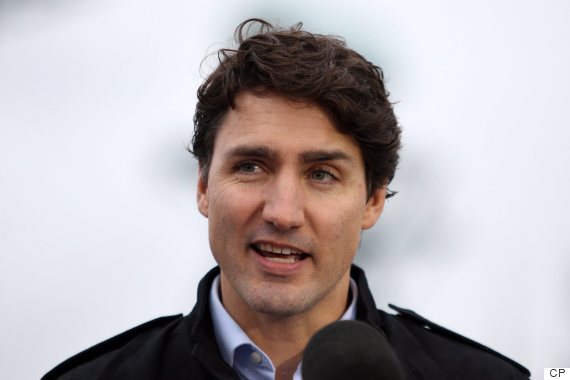
Prime Minister Justin Trudeau speaks to media after meeting with members of the Canadian Forces in Esquimalt, B.C., on Thursday. (Photo: Chad Hipolito/The Canadian Press)

“The first is to protect our kids. Right now we know that young people have easier access to marijuana than just about any other illicit substance. It’s easier to buy a joint for a teenager than it is to buy a bottle of beer. That’s not right,” he said.

“Secondly, we know that criminal organizations and street gangs are making billions of dollars off of the sale of marijuana. We feel that regulating it, controlling it will bring that revenue out of the pockets of criminals and put it into a system where we can both monitor, tax it and ensure that we are supporting people who are facing challenges related or unrelated to drug use.”

But the government doesn’t plan to go any further than legalizing marijuana in legislation he hopes will be introduced by this summer.

“Right now we know that young people have easier access to marijuana than just about any other illicit substance.”

“We are not planning on including any other illicit substances in the move towards legalizing and controlling and regulating,” he said.

Trudeau is scheduled to participate in a roundtable discussion with first responders and health-care workers on Friday in Vancouver on British Columbia’s opioid crisis, which killed 922 people last year.

Feds giving $10M to help with overdose crisis

A recent federal announcement giving $10 million to the provincial government to help fight overdose deaths is aimed at improving the response to the crisis, said Trudeau.

Although it is up to the province to decide how that money is spent, he says people in Vancouver’s Downtown Eastside told him in December more money was needed to keep safe consumption sites open longer for drug users in the inner-city neighbourhood.

“This is an issue that we are taking very seriously and we will continue to engage in,” he said.

Trudeau spent Thursday morning on the naval base, where he went on a five-kilometre run with military personnel, met with sailors and toured the facility.

He was also scheduled to meet Victoria Mayor Lisa Helps at city hall, where protesters gathered outside carrying signs that chided the government for dropping plans to reform the electoral system.

  • Page 1
  • Page 2
  • Go to Next Page »
Access Politics Health Higher Learning
Licensed Producers Dispensaries Clinics

Cultivate Change © 2026 WeedHub | info@weedhub.ca