
• Skip to main content

Kellie Leitch says marijuana is a ‘dangerous drug,’ vows to undo Liberal plan to legalize it

OTTAWA—Marijuana is a “dangerous drug,” Conservative leadership hopeful Kellie Leitch said Tuesday as she promised to undo the Liberal government’s efforts to legalize it, should she become her party’s leader and eventually prime minister.

There are too many public health and safety concerns surrounding marijuana for it to be legal, Leitch told The Canadian Press as the government prepares to table legislation later this week to legalize and regulate its sale.

Political Ottawa has been buzzing for weeks about what will be in the bill, expected Thursday. One key task-force recommendation that the government could act on is imposing an age limit of 18 on those who seek to buy it.

Read more:

Trudeau’s pot promise is about to be put to the test: Hébert

Experts warn taxes on legalized pot must stay as mergers expected to heat up

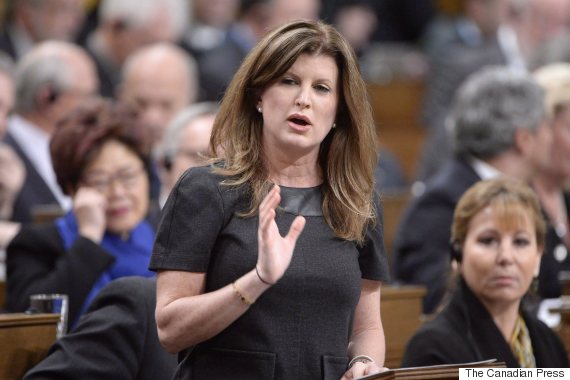
Conservative leadership candidate Kellie Leitch says she would look to roll back the Liberal plan to legalize marijuana if she becomes the party's leader and eventually prime minister.
Conservative leadership candidate Kellie Leitch says she would look to roll back the Liberal plan to legalize marijuana if she becomes the party’s leader and eventually prime minister.  (ADRIAN WYLD / THE CANADIAN PRESS)  

“Look, I will be reviewing it, but I’m a pediatric orthopedic surgeon — I have personal views on this that I feel very strongly about,” Leitch said in a roundtable interview.

“I don’t think that we should be legalizing this drug; this is a dangerous drug and I don’t want it in the hands of children.”

Scientific evidence shows the drug can have damaging effects on the brains of those under the age of 25 and should only be available from pharmacies for patients with prescriptions, Leitch added.

“I have young people come to me as a physician and say ‘You know, I don’t understand, Dr. Leitch — I’m told not to do drugs, but can I do this drug now?” she said. “These are the kinds of messages Canadian parents do not want portrayed to their kids.”

In an August submission to the federally appointed task force on marijuana, the Canadian Medical Association recommended a minimum age of 21, as well as limits on quantities and potency for those aged 21-25 to discourage use and sharing among underage friends.

The driving purpose of the Liberal government’s plan is to address Canada’s “very high rates” of cannabis use among young people — among the highest rates in the world, Health Minister Jane Philpott said Tuesday.

Criminalizing cannabis has not deterred its use by young people, Philpott said in an interview. Other products known to be harmful, including alcohol and tobacco, are available with restrictions for legal consumption, she added.

“As we legalize cannabis and make a decision about what age it can be accessed, we know that regardless of the age of the person consuming, that it is a product that has potential risk associated with it,” Philpott said.

“That’s why we are taking a public health approach with a strong focus on public education.”

One of the current challenges is a shortage of information on products like cannabis, she added, insisting that legalization should in no way be taken as a signal that pot can be used with impunity and without an understanding of the potential risks.

“This is a way of responding to the reality of the fact that rates of use are extremely high in young people and we need to take an approach that acknowledges public health, acknowledges the approach of criminalization has not deterred young people from using it,” Philpott said.

Benedikt Fischer, a University of Toronto psychiatry professor and senior scientist with the Centre for Addiction and Mental Health, said there are clear risks and harms associated with cannabis, but a strong upside to legalization from a public health perspective.

Trying to restrict its use to people aged 25 and up will only drive young people to the black market, he added.

“What will those people under 25 do if they are not allowed legal access?”

Chuck Rifici, a co-founder of Canada’s first publicly traded marijuana company who now chairs National Access Cannabis — a company that works with patients navigating the medical marijuana system — said Tuesday said he will look at whether the government acts on task force advice, allowing mail-order marijuana sales.

Selling through the mail would help the government achieve its election promise on pot, Rifici said, noting it also ensures Ottawa is not beholden to provincial distribution systems yet to be established.

“If it is hard to access legal product, like any controlled substance, if there’s not a legal option, people will turn to another option,” Rifici said, a former treasurer for the Liberal party’s national board of directors.

“I think it makes more sense to make it easier for Canadians to access safe, tested, federally licensed product.”

The task force, which issued a 106-page report in December, also recommended storefront sales to people 18 and older with personal growing limits of four plants per person and a 30-gram limit on personal possession.
Read more about:

Marijuana

Rona Ambrose Softens Tone On Liberal Plan To Legalize Marijuana

The interim leader of the Conservative Party, who as health minister consistently railed against any notion of legalizing marijuana, has had something of a change of heart.

No, Rona Ambrose does not suddenly support legalizing pot. But on Wednesday, in another apparent shift from her predecessor Stephen Harper, the official Opposition leader suggested on a Vancouver radio show that the sooner the new Liberal government takes action, the better off kids will be.

Ambrose, currently on a cross-country tour focused on the economy, was pressed by CKNW AM 980’s Simi Sara on the past government’s record of pot prohibition and whether the stance hampered her party’s election results.

rona ambrose
Interim Tory Leader Rona Ambrose speaks in the House of Commons. (Photo: The Canadian Press)

Ambrose said as health minister under Harper, she was concerned about the “infiltration” of unregulated marijuana dispensaries. There was evidence, she said, that such stores were selling pot to children.

She remains worried about dispensaries now that the “cat’s out of the bag.”

“There’s hundreds of them popping up,” she said.

When Sara noted much of that happened under Ambrose’s watch, the top Tory said that while her party always expected police to “do their jobs,” the City of Vancouver opted to regulate dispensaries on a municipal level — a decision she blasted publicly last June.

While repeating her concern that legalizing pot normalizes the drug, Ambrose conceded that a large faction of Canadians — “that are mostly adults, to be frank” — want access to marijuana for recreational purposes. Those voters supported Justin Trudeau’s Liberals in the last campaign and were a “strong force” in places such as Vancouver.

Now, Ambrose wants to see what Trudeau’s government plans to do to control the substance.

“The sooner they can move on that, the better to protect kids.”

“Whatever (the regulations) look like, Prime Minister Trudeau has said he’s going to keep pot out of the hands of children. So, good,” she said. “That’s what we need to do.

“I hope that the faster they move on this the better because the proliferation of pot dispensaries is quite large. It’s moved now, not just in Vancouver but across the country and they’re unregulated. So, the sooner they can move on that, the better to protect kids.”

Trudeau has long maintained that legalizing and regulating the drug will do more to keep it away from children — a position that was repeatedly blasted by Tories in attack ads.

Listen to Ambrose’s full interview below:

Ambrose said she was ‘skeptical’ Liberals could protect kids

In an interview with The Huffington Post Canada last month, Ambrose expressed doubt that legalizing pot could help keep the drug away from young people.

“That’s not what we’ve seen in other countries,” she said. “As the Liberals move forward, our big push with them will be to make sure that if they’re going to legalize that they implement the regulation in a way that protects children. And I’m very skeptical that they are going to be able to do that.”

Ambrose’s remarks this week also conflict with what she said in the House of Commons months ago.

In June, then-Vancouver Tory MP Wai Young — who was defeated last fall by Defence Minister Harjit Sajjan — rose during question period to lament that there were “even more marijuana stores in Vancouver” than ever before. Young asked for an update on health risks of smoking pot.

In her response, Ambrose pointed to comments from a past president of the Canadian Medical Association that marijuana poses lasting health effects for youth. She suggested only the Tories were looking out for kids.

“While the Liberal leader and the New Democrats support making marijuana use an everyday, normal activity and having it available in storefronts like Starbucks, our government will continue to protect young people from marijuana,” she said.

Harper on campaign trail: Pot ‘infinitely worse’ than tobacco

While pot was not as big of an issue in the last campaign that some predicted, Harper sparked headlines in October when he said marijuana was “infinitely worse” than tobacco.

A radio interview just days before the vote ultimately turned testy when the former Tory leader was repeatedly asked to provide proof to back up that claim. Harper pointed to “science.”

Tories also released controversial ads targeting Chinese and Punjabi-speaking voters that alleged Trudeau’s Liberals wanted to sell pot sold to children.

Liberals stated in their speech from the throne last month the new government would, as promised, “legalize, regulate and restrict access to marijuana.”

Former Toronto police chief Bill Blair, now an MP for Scarborough and parliamentary secretary for the minister of justice, has been tapped to handle the contentious file.

Sorry, interim Conservative leader Rona Ambrose did not call for pot’s legalization on Vancouver radio

At first it looked like the ultimate flip-flop: the very health minister who ran controversial anti-marijuana ads backs legalization after taking over her routed right-wing party.

Chris Roussakis/ for National PostTweed medical marijuana facilities in Smith Falls, Ontario, Jan. 5, 2016.

But that’s not what interim Conservative Party leader Rona Ambrose said on a Vancouver radio station Wednesday, despite what social media and misleadingheadlines may suggest. What Ambrose actually did on CKNW New Talk was defend her former government’s (widely mocked) ads about pot and kids’ brains and urge Prime Minister Justin Trudeau to “take it slow” on legalization while moving quickly to regulate the proliferation of medical marijuana dispensaries across the country.

Host Simi Sara started off by asking Ambrose if she thought the party’s opposition to marijuana legalization hurt them in October’s election, especially in pot-friendly places like Vancouver.

“I don’t think so because my message was always about the public health impact on children,” Ambrose said, before referring back to her work as health minister to heavily regulate medical pot, while also warning against recreational use. “As Health Minister at the time, I was really concerned about the infiltration of these dispensaries that are not regulated, there was evidence that they were selling to kids… The product itself is in no way regulated or checked by anyone so no one know what’s in it. We’re still in that situation and that’s a concern.

The new government will legalize marijuana, we know that.

“The new government will legalize marijuana, we know that. My concern is the cat’s out of the bag with the dispensaries, there’s hundreds of them popping up they’re not regulated. I don’t know how they’re going to get that back (under control).”

She also blamed municipal government’s like Vancouver for the growing number of dispensaries, as she said the “decision was made locally” to allow them to open and for police to ignore their spread. She also urged Trudeau to continue to spread the public health gospel that marijuana is dangerous for developing brains.

So, no, Ambrose didn’t all of a sudden learn to stop worrying and love the bong.

In many ways she clung to previous misinformation the Conservatives spread — while many medical pot dispensaries, especially in B.C., operate in a legal grey zone, there’s little evidence they sell to kids. And she defended anti-pot ads even some doctors thought were too political.

Related

  • Canadian doctors’ groups refuse to take part in federal government’s ‘political’ anti-drug campaign
  • National Post View: Veiled political messaging behind latest anti-pot ads? How dare you!

“We invested $7 million in a public health campaign. We did TV ads, we did radio ads, print ads. They were all vetted by the scientific community and the medical community. A number of medical associations helped provide the idea and the input for the ad campaign and it was all focused on kids and the impact on the developing brain and potentially cognitive and psychological problems that could happen,” Ambrose said, apparently forgetting several prominent medical groups — the College of Family Physicians of Canada, Canadian Medical Association and Royal College of Physicians and Surgeons of Canada — refused to back the Health Canada ads because they were deemed too political.

So what did Ambrose say that has so many spinning her words into disjointed pro-pot policy? She acknowledged that pot legalization is all but inevitable, so instead of beating the criminalization drum, she urged health promotion instead.

I say to the government, make sure you take it slow, that you got the right public health measures in place, the right restrictions to keep it away from kids.

“I say to the government, make sure you take it slow, that you got the right public health measures in place, the right restrictions to keep it away from kids. It’s a tough thing to do when you legalize something, because when you legalize, you normalize it and then it becomes more acceptable and more available,” she said the Canadian Paediatric Society has repeatedly warned against pot’s effect on growing brains. “We need to have a really strong public health campaign aimed at kids if this moves ahead.”

Not exactly a ringing endorsement of marijuana legalization. But near the end of the interview, Ambrose showed the party is listening to the growing number of adults who believe pot can be regulated like alcohol, again without fully backing full-blown legalization.

REUTERS/Patrick DoyleA Canadian flag with a marijuana leaf is flown during a 4/20 rally to demand the legalization of marijuana on Parliament Hill in Ottawa April 20, 2012.

“I think the bottom line is there’s a huge faction of people in this country, that are mostly adults to be frank, that want access to pot and they want it legalized and it’s for recreational purposes and that’s the reality,” Ambrose said. “When you talk about legalization my concern was to move that quickly in that direction without a proper regulatory regime around recreational marijuana would mean that that would be something that would be more accessible to kids. We don’t know what the government is going to do; we don’t have any sense what the regulations will look like, but whatever they look like Prime Minister Trudeau has said he’s going to keep pot out of the hands of children is god, that’s what we need to do.”

And that’s when we get to the key phrase, where Ambrose urges swift action to protect innocent minds from the cannabis corruption:

“I hope that the faster they move on this the better because the proliferation of pot dispensaries is quite large — it’s moved now not just in Vancouver but across the country — and they’re unregulated, so the sooner they move on that the better to protect kids,” she said.

So why is everyone freaking out that this is yet another Conservative party about face since the election? Because Ambrose has been making the rounds trying to remake the party in a softer, gentler more open-minded image than when Stephen Harper was in control. But it’s also the effect of moving to opposition, where a party’s role is to probe the government, even on issues it may have put into motion. Most recently, the Tories have been criticized for changing their tune on a massive arms deal with Saudi Arabia, something Ambrose addressed — alongside questions of whether her marijuana stance has changed — head on:

“It’s not so much that you’re changing you’re position. but as a position changes you have to ask the government those tough questions, whether it’s the human rights record of Saudi Arabia (or another issues), that’s the obligation of the opposition. Mr. Trudeau has made a commitment to transparency and we’ve made a commitment to Canadians to ask tough substantive questions and on the issue of Saudi Arabia and the human rights record, we’ve asked him to be clear about what this government’s position is. It is a new government, so obviously we have an obligation to ask them where they stand on these issues.”

Tory leadership race sparks issue of marijuana legalization

As candidates for the Conservative Party’s leadership race continue to line up, an issue has emerged that many thought the Tories had put to bed a long time ago — the legalization of marijuana.

Former prime minister Stephen Harper called marijuana “infinitely worse” than tobacco. “If we sell marijuana in stores like alcohol and tobacco, that will protect our kids? No one believes that,” he said.​

But last week Maxime Bernier injected a slightly unexpected element into the race when he suggested he was leaning toward supporting a Liberal motion to legalize possession of marijuana for recreational use, as has already happened in four U.S. states and the District of Columbia.

  • Ex-police chief Bill Blair to handle Liberals’ pot legalization file
  • Legal pot taxes could add $5B a year to government, CIBC says
  • Addiction experts say Canada should learn from U.S. pot experience

“I think it must be time to have a discussion with that,” he told Rosemary Barton, host of CBC News Network’s Power & Politics. “I am happy that this government will bring a bill.”

“I am more for it” than against it, he said. “It depends how the government will do it. At the end I will decide whether I will vote for it or against it. But I am more toward — for — that.”

That position sets Bernier at odds with his party’s long-held opposition to loosening the laws against recreational use of marijuana.

Law unpopular with Tory voters

According to Vote Compass, CBC’s voter-engagement survey, about 37 per cent of Conservative voters in the last election said they supported the full legalization of marijuana.

Another 38 per cent of Conservatives supported the NDP’s position of decriminalization of marijuana — a step short of legalization that would treat pot possession similar to a traffic offence.

Only a quarter of Conservative voters agreed with Harper’s position that marijuana possession should remain a criminal offence —  a number that drops to 14 per cent across all voters.

These numbers suggest there is an audience within the Conservative Party for a more libertarian viewpoint — like the one Bernier is pitching.

On the other side of the debate is Bernier’s only other declared rival, former minister of labour Dr. Kellie Leitch. She is one of the few Conservatives who have continued to thunder against the impending legalization of marijuana since the party’s electoral defeat in October 2015.

“Health Canada spends hundreds of millions of dollars every year to encourage Canadians to stop smoking. Now the government wants Canadian kids to have access to a drug to smoke, marijuana,” she told the House of Commons in February. “Parents are scared and concerned for their children. The government is sending out mixed signals.”

Indeed, the Liberals have been criticized by advocates of marijuana reform for maintaining the current criminal penalties while they take their time drafting a legalization plan, rather than moving immediately to decriminalize as an interim measure.

Not clear where leader stands

Also sending out mixed signals is interim Conservative Leader Rona Ambrose.

As Harper’s health minister, Ambrose often found herself fronting the party’s anti-legalization approach, including the “reefer madness” strategy of linking marijuana use to mental illness.

So an interview she gave in January to Vancouver radio station CKNW caused considerable confusion about her position.

“The bottom line is there’s a huge faction of people in this country that want — that are mostly adults, to be frank — that want access to pot and they want it legalized and it’s for recreational purposes.”

Ambrose then said she hoped the Liberals would push ahead faster to regulate storefront pot dispensaries that have sprung up around Vancouver.

“I hope the faster they move on this the better, because the proliferation of pot dispensaries is quite large, so it has moved now not just in Vancouver but across the country, and they’re unregulated. So the sooner they can move on that, the better to protect kids.”

Conservatives later explained that Ambrose was merely recognizing the inevitability of legalization, and encouraging the Liberals to get on with it. But government supporters jumped on what they saw as another Conservative post-election reversal.

“Health minister who spent millions of your $ on misleading ads against pot wants us to legalize faster,” tweeted Trudeau’s principal secretary Gerald Butts.

Will the vote be whipped?

It remains to be seen whether marijuana will become an issue in the Tory leadership race, or if members who dissent from the official party line will be able to express those views in Parliament.

Asked whether the party intends to allow a free vote when marijuana reform finally comes before the House, Ambrose’s director of communications Mike Storeshaw told CBC News no decision has been taken.

“Decisions on caucus positions for legislation aren’t made until there’s actually legislation to consider, and we don’t appear to be anywhere near that point yet.”

Marijuana must be regulated quickly to protect kids, Conservatives say

The Liberal federal government is facing pressure from an unlikely source to quickly legalize and regulate the sale of recreational marijuana: the Conservative Party of Canada.

At a news conference on Monday, interim Conservative leader Rona Ambrose said the growing number of illegal dispensaries is increasing the risk that children will get access to pot. As such, she said, the pressure is on the government to present and implement its plan to legalize marijuana.

“[Prime Minister Justin Trudeau] said he will legalize writ large, which will make pot much more available, but he will protect kids, he will keep it out of the hands of kids,” Ms. Ambrose said. “I think he needs to move quickly on that, because we already know that this is happening across the country.”

The previous Conservative government, including Ms. Ambrose in her role as the health minister, was a strong opponent of the legalization of marijuana for recreational purposes. Even in terms of medical marijuana, the Tories were openly skeptical of the drug’s potential health benefits and enacted strict regulations that limited its access to the population.

However, Ms. Ambrose said the Liberal election victory on Oct. 19 was widely interpreted as the arrival of a new marijuana regime in Canada.

“When this new government was elected, there was a clear message sent that marijuana is legal, marijuana will be legal,” she said. “The problem there is it sent a message to all of those who want to profit from this industry. We see the proliferation of pot dispensaries all across the country, and the concern there is that there is some evidence that some of them are selling to young people.”

Ms. Ambrose added that her position on marijuana has not changed. “I’ve never been in favour of the legalization writ large, the way Mr. Trudeau envisions this industry moving forward, but it’s incumbent on him to come forward with a plan to show how he will keep it out of the hands of kids,” she said.

On July 31, 2015, when she was still the minister of health, Ms. Ambrose ordered a crackdown on groups that illegally advertise marijuana and restated the Conservative Party’s pledge to keep storefront dispensaries illegal.

“Today, I directed Health Canada to create a task force to crack down on illegal marijuana advertising,” she said in a statement just a few days before the election was called. “This task force will ensure that those who engage in such illegal activities are stopped, and should these illegal activities continue, promptly referred to law enforcement.”

This 4/20, here are 11 stats that show weed has definitely gone mainstream

Published: Apr 20, 2017, 8:31 am • Updated: Apr 20, 2017, 8:31 am

By Christopher Ingraham, The Washington Post

Many marijuana users hide their stash in their closets. Most people who use marijuana are parents. There are almost as many marijuana users as there are cigarette smokers in the U.S.

Those facts and many more are among the conclusions of new survey from Yahoo News and Marist University, which illustrates how pot has become a part of everyday life for millions of Americans.

1. Nearly 55 million adults currently use marijuana

More than half of American adults have tried marijuana at least once in their lives, according to the survey. Nearly 55 million of them, or 22 percent, currently use it – the survey defines “current use” as having used marijuana at least once or twice in the past year. Close to 35 million are what the survey calls “regular users,” or people who use marijuana at least once or twice a month.

Those numbers are larger than what we see in some other surveys. A Gallup poll released last year found that more than 33 million adults identified as “current” marijuana users, although it didn’t specify a time frame the way this survey did. The latest federal survey on drug use found about 33 million adults used marijuana in the past year, considerably lower than the Marist poll’s 55 million figure.

But those federal numbers are from 2015, while the Marist poll was conducted last month. Considering four more states have legalized marijuana since the federal survey was done, attitudes on use may have changed enough that more are comfortable admitting their use to a survey.

Survey mode is another potential factor: The Marist poll was done via phone, while the federal survey involved interviewers speaking with people in their homes. Considering marijuana remains fully illegal at the federal level, people may simply be more comfortable admitting their use to a voice at the end of a phone line than a representative of the federal government.

Regardless, 55 million people is a staggering number. It would mean that there are nearly as many marijuana users as there are cigarette smokers (59 million).

2. Support for recreational marijuana may not be as robust as it seems

Public opinion surveys consistently show that support for marijuana legalization hovers around 60 percent. But most of those surveys don’t ask respondents what, exactly, legal marijuana means to them – they just ask whether marijuana should be legal or not.

The Marist survey asked about medical and recreational marijuana separately. It found that about 83 percent of Americans say they support medical marijuana, in line with what other national surveys have shown. But respondents were closely divided on the question of “legalizing the use of marijuana for recreational use” – 49 percent support it, 47 percent oppose.

That lines up with a detailed breakdown of the legalization issue in a survey by the Associated Press and the National Opinion Research Center last year, where 61 percent said they supported legalization, but 24 percent of those supporters clarified that they only supported medical use.

3. People who have tried marijuana are much more approving of it than those who haven’t

Prior marijuana use is one of the biggest predictors of support for recreational marijuana legalization. Fully 70 percent of Americans who have tried marijuana at least once support legalizing recreational weed. Only 26 percent of those who haven’t tried it say the same.

In short, people who have experience using marijuana generally think it should be legal. This has potentially significant implications for the national legalization debate: As marijuana becomes legal in more states, more people will try it. This could lead to greater support for legalization, even more states legalizing, more people trying it, and so on.

4. Most Americans think smoking weed is ‘socially acceptable’

Regardless of whether they support legalization or use it themselves, 56 percent of Americans say that using marijuana is “socially acceptable,” compared to 42 percent who say it isn’t. Again, there’s a big split here between people who’ve tried it (74 percent say it’s acceptable) and people who haven’t (37 percent).

Majorities also said it would make no difference to them if they learned that their doctor, clergyman, favorite athlete, favorite celebrity or children’s schoolteacher used marijuana in their personal life. Americans do, however, disapprove of parents smoking pot in front of their kids: 79 percent say they would have less respect for such a person.

4/20 marijuana smokingAn attendee smokes marijuana during the April 18, 2015 4/20 celebration at Civic Center Park in Denver, Colorado. (Brent Lewis, The Denver Post)

5. Americans say weed is less risky than tobacco, alcohol or painkillers

By a margin of 72 percent to 20 percent, Americans say that regular alcohol use is more of a health risk than regular marijuana use. The margins for tobacco (76 to 18) and prescription painkillers (67 to 20) are similar.

But the public is split on whether pot is a risk in and of itself: 51 percent say using marijuana is a health risk, while 44 percent say it is not. Like any drug, there are indeed serious risks associated with marijuana use: addiction, long-term health problems, driving impairment, you name it. While it’s true that the risks associated with marijuana are generally lesser than the risks of using alcohol or other drugs, that doesn’t mean that it’s “safe,” full-stop.

6. Marijuana’s legal status isn’t a huge barrier to use

Asked why they don’t use pot, 27 percent of marijuana abstainers cited its illegality. But the rest pointed to a host of other reasons: 26 percent said they simply don’t like it. 16 percent said they don’t use because it’s not healthy. Others said that it would interfere with work or school or that they simply had no desire to use it.

These numbers are mirrored in another question: Asked whether they would use marijuana if the federal government legalized it nationally, only 28 percent said they’d be likely to do so. The rest said the legal change wouldn’t make much of a difference in their behavior.

This points to a simple reality: Marijuana is already the most ubiquitous illicit drug in the country, rivaling legal drugs like tobacco in popularity. For most people who want to use it, getting hold of some pot is simply a matter of a trip to the darkweb, or Craigslist, or a call to a friend-of-a-friend.

7. Most marijuana users are millennials

Fully 52 percent of the country’s 55 million pot users are millennials. Majorities of marijuana users are male, make under $50,000 a year and lack a college degree. Only 14 percent of current users are Republicans, and over two-thirds supported Hillary Clinton in the latest presidential election.

Interestingly, millennial marijuana users appear to be the most conflicted about their use: 25 percent of them say they’ve felt “guilty” about their marijuana habit, compared to only 17 percent of non-millennials. That brings us to the next point:

8. Few people want to admit they use marijuana just for fun

This is one of the survey’s most interesting findings: asked why they currently use marijuana, only 16 percent of smokers said it was “just to have fun.” The rest cited a variety of utilitarian reasons: 37 percent said they used marijuana to relax; 19 percent said they do it to relieve pain, 10 percent said it helps them be social.

If there’s any group in society who do something “just to have fun,” you’d think it would be marijuana users. The stereotypical image of the “stoner” is the guy blazed out of his mind on his couch, eating Funyuns and giggling at his TV.

But most users don’t see themselves this way. For them, marijuana is less about recreation and more of a product that fulfills a specific need in their life: relaxation, or pain relief, or social lubricant.

9. Where people hide their stash – dressers, fake cans or tins, or locked containers

Roughly four in 10 marijuana users hide their stash from others. Among those who hide their pot, the dresser (20 percent) is the most popular place of concealment, followed by fake cans, containers or books (11 percent), in safes or locked containers (11 percent) and the closet (8 percent).

Astonishingly, 3 percent of marijuana users keep their marijuana in their cars. If you’re familiar with the practices of highway drug interdiction you know this is a terrible idea. Drug task forces routinely use minor traffic infractions like busted taillights, failure to turn or speeding as a pretext for searching for contraband in a person’s car, often with the aid of a drug-sniffing dog.

Marijuana users say they hide their stashes to keep it away from the prying eyes of children, law enforcement and parents/grandparents, respectively.

10. More than half of marijuana users are parents

According to Marist, 54 percent of adults who use marijuana are parents. A majority of those parents – 16 million of them – have children under the age of 18.

Childhood exposure has been a big talking point for opponents of marijuana legalization. States like Colorado have seen an uptick in the incidence of small children inadvertently eating marijuana edibles and having to go to the emergency room. In raw number terms, however, these cases are still very rare. Nationwide, poison control centers get calls for pediatric exposure to marijuana and alcohol at identical rates once you control for the total number of users of both substances.

In the Marist survey, 94 percent of marijuana-using parents of underage kids say they’ve never used it in front of their kids or shared it with them.

11. Most people are open about marijuana use with their family and friends.

Marijuana users are very open about their habit with their significant others (95 percent of users have told them) and close friends (95 percent again). 72 percent have told their parents about their marijuana use, and 60 percent have told their kids.

Some families even toke together – 21 percent of users have either smoked marijuana in front of their parents or shared a joint with them. Among older users with adult children, 35 percent have smoked with or in front of their kids. Over 60 percent of users have done so with their close friends.

Millennials are the most social pot users – only 25 percent of them typically smoke alone. The rest usually share with significant others and friends. Older pot users are more likely to smoke alone: 40 percent of the over-35 crowd usually use marijuana by themselves.


To see fun charts for these stats, visit Christopher Ingraham’s Wonk Blog

  • « Go to Previous Page
  • Page 1
  • Interim pages omitted …
  • Page 37
  • Page 38
  • Page 39
  • Page 40
  • Page 41
  • Interim pages omitted …
  • Page 46
  • Go to Next Page »
Access Politics Health Higher Learning
Licensed Producers Dispensaries Clinics

Cultivate Change © 2026 WeedHub | info@weedhub.ca